Catalog No. A1042

Angiotensin II

(别名:Angiotensin II human; 血管紧张素Ⅱ)

有效的血管加压剂,选择性血管紧张素 II 1 型受体(AT1R)激活剂

Angiotensin II
规格价格货期数量
5mg
¥437.00
现货
10mg
¥701.00
现货
25mg
¥1147.00
现货
50mg
¥1605.00
现货
100mg
¥2365.00
现货
CAS号:4474-91-3纯度:98.80%
仅用于科研,不用于诊疗。未经明确授权不得转售。
A
021-55669583sales@apexbio.cnAPExBIO

特色产品

Annexin V-FITC/PI Apoptosis Kit
用于双染检测细胞凋亡和坏死
- 在10-20分钟内完成染色
- 适用于流式细胞仪和荧光显微镜检测
- 准确区分活细胞/凋亡细胞/坏死细胞
Phos binding reagent (Phosbind) acrylamide
分离和检测磷酸化/非磷酸化蛋白
- 新型的磷酸盐结合标签和功能分子
- 用于免疫印迹和质谱分析等后续操作
- 适用于30 KDa-130 KDa大小的蛋白
Cell Counting Kit-8 (CCK-8)
用于细胞增殖和细胞毒性试验
- 比MTT,MTS或WST-1更敏感
- 对细胞无毒性
- 步骤更简单,无需有机溶剂
Cy5 TSA Fluorescence System Kit
Cy5荧光标记的酪胺信号放大系统
- 检测ICC/IHC/ISH中的低丰度靶点
- 可将信号灵敏度提高100倍
- 同时保持稳定的特异性和分辨率
EZ Cap™ Cy5 Firefly Luciferase mRNA (5-moUTP)
用于观察mRNA运送,定位,翻译
- 具有Cap1结构的荧光素酶mRNA
- 提供更高的转录效率并抑制免疫激活
- 使用5-moUTP和Cy5-utp修饰
HotStart™ 2X Green qPCR Master Mix
用于荧光定量目标DNA或cDNA
- 通过热启动机制优化扩增特异性
- 优异的扩增效率、可重复性和稳定性
- 卓越的灵敏度和准确性,操作简单
HyperScribe™ T7 High Yield Cy5 RNA Labeling Kit Plus
高效的Cy5修饰RNA转录试剂盒
- 适合原位/Northernblot杂交实验
- 优化的缓冲液和T7 RNA聚合酶混合物
- 20 μL反应体系可获得更高的RNA产量

产品描述

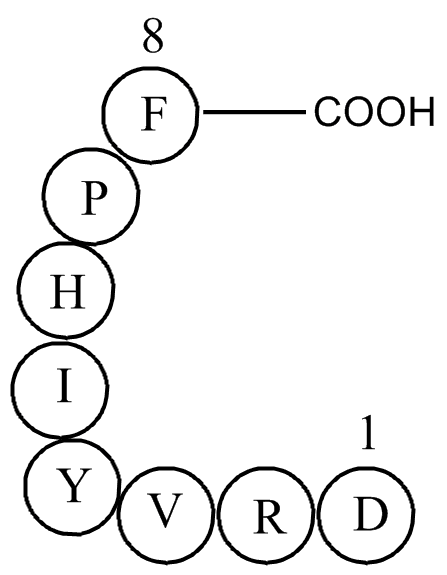
人血管紧张素II (多肽序列:Asp-Arg-Val-Tyr-Ile-His-Pro-Phe | His-Leu,CAS 号 4474-91-3), 是由血管紧张素转换酶(ACE)移除血管紧张素I (AI)的两个C-末端残基而生成的一种八肽,主要通过肺中的ACE(但ACE还存在于内皮细胞和肾上皮细胞)。已经证实,血管紧张素II 在介导高血压、心力衰竭、心脏重塑、糖尿病,以及响应于动脉创伤的增殖和炎性反应中起重要作用[1]。

核心作用靶点为血管紧张素 II 1 型受体(AT1R),对其呈激活作用,不依赖血管紧张素 II 2 型受体(AT2R),激活 AT1R 可上调氧化低密度脂蛋白凝集素样受体 1(LOX-1)表达,LOX-1 活化后又反馈上调 AT1R 形成正反馈环路;参与AT1R→LOX-1→NADPH 氧化酶→ROS 生成→p38/p44/42 MAPK 磷酸化→VEGF 表达上调的促毛细血管形成信号通路。

体外细胞实验(人冠状动脉内皮细胞 HCAECs)中,0.1~20 nmol/L Ang II 处理 24 h 可促进毛细血管样管腔形成,1 nmol/L 为最优促血管生成浓度,50、100 nmol/L 时管腔形成效应减弱,1 nmol/L Ang II 可显著上调 LOX-1、VEGF 表达,升高胞内 ROS 水平并增强 p38/p44/42 MAPK 磷酸化,AT1R 阻断剂氯沙坦(1~10 μmol/L,剂量依赖性)、NADPH 氧化酶抑制剂 Apocynin(600 μmol/L)、抗 LOX-1 抗体(10 μg/mL)、p44/42 MAPK 抑制剂 U0126(10 μmol/L)、p38 MAPK 抑制剂 SB203580(10 μmol/L)均可显著抑制上述效应,AT2R 阻断剂 PD123319(10 μmol/L)无明显作用。

动物实验(8 周龄 C57BL/6 小鼠胸主动脉环)中,1 nmol/L Ang II 处理 7 天可显著诱导毛细血管芽生成,氯沙坦、Apocynin、抗 LOX-1 抗体可使血管芽数量与长度降低约 70%,PD123319 无抑制效果,LOX-1 敲除小鼠主动脉环经 Ang II 刺激后几乎无毛细血管芽生成。

参考文献:

1. Ruiz-Ortega M, Lorenzo O, Ruperez M, Esteban V, Suzuki Y, Mezzano S, Plaza JJ, Egido J. Role of the renin-angiotensin system in vascular diseases: expanding the field. Hypertension. 2001; 38: 1382–1387.

2. Geisterfer AA, Peach MJ, Owens GK. Angiotensin II induces hypertrophy, not hyperplasia, of cultured rat aortic smooth muscle cells. Circ Res. 1988; 62: 749–756.

3. Berk BC, Vekshtein V, Gordon HM, Tsuda T. Angiotensin II-stimulated protein synthesis in cultured vascular smooth muscle cells. Hypertension. 1989; 13: 305–314.

4. Hu C, Dandapat A, Mehta JL. Angiotensin II induces capillary formation from endothelial cells via the LOX-1 dependent redox-sensitive pathway. Hypertension. 2007 Nov;50(5):952-7. doi: 10.1161/HYPERTENSIONAHA.107.096446. Epub 2007 Sep 24. PMID: 17893372.

5. Xue B, Pamidimukkala J, Hay M. Sex differences in the development of angiotensin II-induced hypertension in conscious mice. Am J Physiol Heart Circ Physiol. 2005 May;288(5):H2177-84. doi: 10.1152/ajpheart.00969.2004. Epub 2004 Dec 30. PMID: 15626687.

产品性质

物理外观Solid
CAS号4474-91-3
分子式C50H71N13O12
分子量1046.2
小分子别名Angiotensin II human
化学名称Angiotensin II
溶解度≥12.58 mg/mL in DMSO; insoluble in EtOH; ≥10.5 mg/mL in H2O
SMILESCCC(C)C(C(=O)NC(CC1=CN=CN1)C(=O)N2CCCC2C(=O)NC(CC3=CC=CC=C3)C(=O)O)NC(=O)C(CC4=CC=C(C=C4)O)NC(=O)C(C(C)C)NC(=O)C(CCCN=C(N)N)NC(=O)C(CC(=O)O)N.CC(=O)O
存储条件-20°C干燥
运输条件蓝冰
注意事项

(1)取出冻干AngⅡ,室温平衡30分钟(避免温差导致吸潮);(2)溶解注意:建议使用塑料离心管(AngⅡ易吸附在玻璃表面,导致浓度降低),加入生理盐水后轻轻颠倒混匀,直至溶液澄清(不可剧烈震荡,避免破坏AngⅡ结构);(3)现配现用,未使用的溶液可短期冷藏(4℃,不超过24小时)。

产品应用 (实验数据来自文献,APExBIO并未验证,仅供参考)

IC50和靶点

生物活性描述血管紧张素 II(Angiotensin II)是一种血管收缩剂;也是肾素/血管紧张素系统的一种主要生物活性肽。在人体中;它主要通过与 G 蛋白偶联受体(GPCR)血管紧张素 II 1 型受体(AT1R)和血管紧张素 II 2 型受体(AT2R)相互作用;在调节血压方面发挥核心作用。它刺激交感神经;增加醛固酮的生物合成和肾脏作用;诱导血管平滑肌细胞生长;增加成纤维细胞中 I 型和 III 型胶原蛋白的合成;导致血管壁和心肌增厚及纤维化。它还能通过依赖于 LOX-1 的氧化还原敏感途径诱导内皮细胞凋亡和毛细血管形成。

生物相关数据

质量控制

操作说明

常见问题

Q1: 造模过程中小鼠死亡率高,怎么办?

大概率是这3个原因:① 麻醉剂量过高(降低异氟烷流速,或减少氯胺酮用量);② 手术感染(全程严格无菌,术后观察切口,及时消毒);③ AngⅡ剂量过高(可降至500 ng/kg/min,尤其是雌性或正常品系小鼠)。


Q2: 为什么有的小鼠造模后没有出现动脉瘤?

AngⅡ造模存在个体差异:

  • 品系差异:诱导动脉瘤、动脉粥样硬化,优先选apoE⁻/⁻或LDL受体缺陷小鼠(正常小鼠造模成功率低);诱导单纯高血压,可选用C57BL/6小鼠;
  • 性别差异:雄性小鼠造模成功率(动脉瘤发生率约50%以上)远高于雌性(不足10%),同一批实验尽量选用同性别小鼠;
  • 饲养环境:造模期间保持饲养笼清洁,温度(22-25℃)、湿度(50-60%)稳定,避免噪音、强光刺激,饮食以常规饲料为主,不随意更换饲料。

若成功率过低,需检查:① 小鼠品系是否正确;② AngⅡ剂量和输注速率;③ 饲养环境是否稳定。


Q3: 渗透泵植入后,小鼠活动异常,是不是泵体移位了?

有可能!若小鼠出现持续搔抓切口、活动受限,可轻轻触摸肩背部,检查泵体是否移位或脱出,若移位,可在无菌操作下重新植入;若脱出,需更换新的渗透泵。


Q4: 如何判断造模是否成功?

  • 血压验证:AngⅡ输注1周后,小鼠血压应比基础值升高20-30mmHg,若血压无明显升高,可能是泵体堵塞、AngⅡ失效或剂量不足;
  • 组织验证:造模结束后,观察主动脉是否有扩张(动脉瘤)、脂质沉积(动脉粥样硬化),可通过大体观察、病理切片进一步确认;
  • 排除异常:若小鼠未出现预期病理变化,但血压升高、血浆肾素浓度降低(AngⅡ的负反馈作用),说明造模成功但个体差异大;若两者均无变化,说明造模失败,需排查泵体和AngⅡ。
APExBIO 顾客使用本产品发表的 34 篇科研文献

1. Shuli Zhang, Feilong Zhang, et al. "Bisphenol-A from environment macro-circulation to human micro-circulation: a novel link to abdominal aortic aneurysm." Environ Int. 2026 Mar 28:210:110217. PMID: 41921401

2. Xufang Huo, Zhenyu Wu, et al. "Diminazene Aceturate Ameliorates Hypertension‐Induced Cognitive Impairment by Disrupting the CCN1–Integrin αvβ6–TGF‐β Axis and Preserving Mitochondrial Integrity." FASEB J. 2026 Mar 31;40(6):e71682. PMID: 41860098

3. Zhihao Ye, Mengyang Song, et al. "Porous graphene films-enabled mass spectrometry imaging reveals metabolic asymmetry in mice after single-dose ethanol intoxication." Chemical Engineering Journal Volume 530, 15 February 2026, 173437

4. ZengShi Li, WeiChen Wang, et al. "SPI1 Promotes Intracranial Aneurysm Formation by Inhibiting Wnt5a Transcription." Front. Biosci. (Landmark Ed) 2026; 31(6): 49794

5. Hongyi Huang, Quan Zuo, Siqi Zhang. "Synthesis and Evaluation of Cyclic Peptide-Based PET Tracers Targeting ADAMTS4 for Early Detection and Monitoring of Aortic Aneurysms." J Med Chem. 2025 Dec 1. PMID: 41324323

6. Yikai Cui, Liwei Liu, Jinyan Zhang. "Macrophage Mertk mediates pressure overload-induced heart failure via type I interferon response." Biochem Biophys Res Commun. 2025 Oct 7:787:152767. PMID: 41076977

7. Joshua Harrison, Kelvin M. Risby, et al. "The Role of Aerosol Liquid Water in Droplet-Assisted Ionization Mass Spectrometry." Anal Chem. 2025 Sep 16;97(36):19918-19925. PMID: 40886134

8. Sophia Gagliardi, Tristan Hotchkin, et al. "The Renin–Angiotensin System Modulates SARS-CoV-2 Entry via ACE2 Receptor." Viruses. 2025 Jul 19;17(7):1014. PMID: 40733630

9. Pingao Zhang, Chenghuan Song, et al. "Endothelium-specific endoglin triggers astrocyte reactivity via extracellular vesicles in a mouse model of Alzheimer’s disease." Mol Neurodegener. 2025 Jul 23;20(1):84. PMID: 40702549

10. Katelin X. Oliveira, Fariha E. Bablu, et al. "Naturally Occurring Angiotensin Peptides Enhance the SARS-CoV-2 Spike Protein Binding to Its Receptors." Int J Mol Sci. 2025 Jun 24;26(13):6067. PMID: 40649848

11. Yiyan Xu, Ying Wang, et al. "Precision Drug Delivery for Multifunctional Treatment of Abdominal Aortic Aneurysm Using Bioactive Tea Polyphenol Nanoparticles." ACS Appl Mater Interfaces. 2025 Jun 18;17(24):35080-35098. PMID: 40479730

12. Zhenyu GU, Qi HUA et al. "Benzyl alcohol improves Ang II-induced vascular and renal injury." Turk J Med Sci. 2025 Feb 19;55(2):509-517. PMID: 40342326

13. Songwen Li, Gang Liu, et al. "Pharmacological and genetic inhibition of BTK ameliorates vascular degeneration, dissection, and rupture." Life Sci. 2025 May15:369:123533. PMID: 40049365

14. Jingjing Zhang, Yuyi Tang, Shan Zhang. "Mitochondrial NAD+ deficiency in vascular smooth muscle impairs collagen III turnover to trigger thoracic and abdominal aortic aneurysm." Nat Cardiovasc Res. 2025 Mar;4(3):275-292. PMID: 39843801

15. Shuli Zhang, Jiayin Li, et al. "Cellular Senescence Genes as Cutting‐Edge Signatures for Abdominal Aortic Aneurysm Diagnosis: Potential for Innovative Therapeutic Interventions." J Cell Mol Med. 2025 Jan;29(2):e70323. PMID: 39823264

16. Jim S. Walker, Bryan R. Bzdek, et al. "Rapid and Sensitive Chemical Analysis of Individual Picolitre Droplets by Mass Spectrometry." Analytical Chemistry Cite this: Anal. Chem. 2025, 97, 1, 854–861. PMID: 39719369

17. Liang Song, Weiwei Zheng, et al. "ROS-responsive core–shell microgels for phase-specific treatment of myocardial infarction via programmed drug delivery." Volume 507,1 March 2025,160295

18. Hong-xia Ma, Ke Wu, et al. "Effects of Empagliflozin and Dapagliflozin in alleviating cardiac fibrosis through SIRT6-mediated oxidative stress reduction." Sci Rep. 2024 Dec 28;14(1):30764. PMID: 39730461

19. Yong Chen, Suipeng Li, et al. "PDE4B abrogation extenuates angiotensin II-induced endothelial dysfunction related to hypertension through up-regulation of AMPK/Sirt1/Nrf2/ARE signaling." Tissue Cell. 2024 Dec;91:102637. PMID: 39591723

20. Yuting Huang, Jikai Zhao, et al. "Persistent hypertension induces atrial remodeling and atrial fibrillation through DNA damage and ATM/CHK2/p53 signaling pathway." Biochim Biophys Acta Mol Basis Dis. 2024 Oct 2:167534. PMID: 39366645

21. Jian He, Yonghong Duan, et al. "Phosphorylated NPY1R regulates phenotypic transition of vascular smooth muscle cells, inflammatory response and macrophage infiltration to promote intracranial aneurysm progression." Neuropeptides. 2024 Dec;108:102465. PMID: 39353356

22. Jiayin Li , Zheming Yang, et al. "The role of mitofusin 2 in regulating endothelial cell senescence: Implications for vascular aging." iScience. 2024 Aug 24;27(9):110809. PMID: 39290834

23. Pengjie Zhang, Bin Du, et al. "Identification and Removal of Pollen Spectral Interference in the Classification of Hazardous Substances Based on Excitation Emission Matrix Fluorescence Spectroscopy." Molecules. 2024 Jul 1;29(13):3132. PMID: 38999084

24. Gang Xu, Yi Xu, et al. "miR-1268a Regulates Fatty Acid Metabolism by Targeting CD36 in Angiotensin II-induced Heart Failure." Cell Biochem Biophys. 2024 Apr 15. PMID: 38619643

25. Sheng Yin, et al. "A Natural Small Molecule Mitigates Kidney Fibrosis by Targeting Cdc42‐mediated GSK‐3β/β‐catenin Signaling." Adv Sci (Weinh). 2024 Apr;11(13):e2307850. PMID: 38240457

26. Manfen Shao, Wei Zhao, et al. "Peptides fromHarpadon nehereusBone Ameliorate Angiotensin II-Induced HUVEC Injury and Dysfunction through Activation of the AKT/eNOS and Nrf2 Pathway." ACS Omega. 2023 Oct 25;8(44):41655-41663. PMID: 37969981

27. Hanlin Lu, Xiuxin Jiang, et al. "Endothelial Sp1/Sp3 are essential to the effect of captopril on blood pressure in male mice." Nat Commun. 2023 Sep 21;14(1):5891. PMID: 37735515

28. Yao Lin, Jingchen Xu, et al. "Axl promotes intracranial aneurysm rupture by regulating macrophage polarization toward M1 via STAT1/HIF-1α." Carbohydr Polym. 2023 Aug 15:314:120962. PMID: 37173016

29. Jiwei Xu, Jianjie Xu, et al. "Impact of different classification schemes on discrimination of proteins with noise-contaminated spectra using laboratory-measured fluorescence data." Spectrochim Acta A Mol Biomol Spectrosc. 2023 Aug 5:296:122646. PMID: 37003145

30. Yu, Yi-Gui, Han, Jun-Hui, et al. "The variations of Endophilin A2-FoxO3a-autophagy signal in AngⅡ-induced dopaminergic neuron injury mouse model and By Biochanin A." Can J Physiol Pharmacol. 2021 Dec;99(12):1298-1307. PMID: 34310897

31. Zhou Z, Ni J, et al. "Angiotensin II induces RAW264. 7 macrophage polarization to the M1-type through the connexin 43/NF-κB pathway." Mol Med Rep. 2020;21(5):2103-2112. PMID: 32186758

32. Zhang SF, Mao XJ, et al. "Qian Yang Yu Yin Granule protects against hypertension-induced renal injury by epigenetic mechanism linked to Nicotinamide N-Methyltransferase (NNMT) expression." J Ethnopharmacol. 2020;255:112738. PMID: 32147479

33. Zhou Z, Ni J, et al. "RIG -I aggravates interstitial fibrosis via c-Myc-mediated fibroblast activation in UUO mice." J Mol Med (Berl). 2020;10.1007/s00109-020-01879-x. PMID: 32036390

34. Chen YJ, Qian ZM, et al. "Angiotensin II down-regulates transferrin receptor 1 and ferroportin 1 expression in Neuro-2a cells via activation of type-1 receptor." Neurosci Lett. 2020 Jan 18;716:134684. PMID: 31830506

摩尔浓度计算器

质量
= 浓度
x 体积
x 分子量
*在配置溶液时,请务必参考产品标签上、MSDS / COA(可在Apexbio的产品页面获得)批次特异的分子量使用本工具。
产品目录
产品目录
质量认证
产品目录
联系我们
通讯
获取最新资讯,产品折扣和优惠。
Copyright ©2013-2026 APExBIO Technology. All Rights Reserved.沪公网安备 31011002003500沪公网安备 31011002003500沪ICP备14019579号-3